Water quality is a critical factor across many Australian industries, including agriculture, hydroponics, water treatment, food processing, and environmental monitoring. Understanding key parameters such as pH, electrical conductivity (EC), and total dissolved solids (TDS) helps professionals assess acidity, dissolved ion levels, and overall solution condition. When these measurements are performed accurately, organisations can improve process control, support regulatory compliance, and maintain consistent product quality.
Understanding the Basics
pH is a measurement that indicates whether a solution is acidic (below 7), neutral (7) or alkaline (above 7). It plays an essential role in applications such as fermentation, disinfection, crop nutrition and industrial effluent treatment, where small variations can significantly affect outcomes. Digital pH meters offer greater accuracy and repeatability than visual testing methods such as indicator strips.
Electrical conductivity (EC) reflects a solution’s ability to conduct an electrical current, which increases as dissolved ionic content rises. These ions are commonly introduced through salts, nutrients, or fertilisers, and EC is typically expressed in µS/cm or mS/cm. Total dissolved solids (TDS) provide an estimated value of dissolved material concentration in mg/L or ppm and are usually calculated from EC measurements using an appropriate conversion factor.
Choosing the Right Instruments
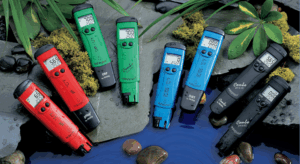
Hanna Instruments provides a broad selection of portable and benchtop meters designed to deliver accurate pH, EC, and TDS measurements across a wide range of applications. Combo pH/EC/TDS testers are particularly effective for field use in agriculture, hydroponics, pools, groundwater assessment, and general water quality monitoring, offering durable and waterproof construction for demanding environments.
For example, the HI98129 waterproof combo tester measures pH, EC, and TDS (ppm) and includes automatic temperature compensation and replaceable electrodes. These features make it well-suited to on-site testing, as temperature compensation reduces measurement errors caused by fluctuations in sample temperature.
Preparation and Temperature Compensation
Reliable measurements depend on effective temperature compensation. pH, EC and TDS values are all temperature sensitive, which is why most modern Hanna instruments incorporate automatic temperature compensation (ATC) to correct readings in real time. This capability is especially valuable in applications where sample temperatures vary throughout the day or between locations.
Before recording results, the probe and meter should be allowed to equilibrate with the sample temperature. Many Hanna instruments also feature a stability indicator that confirms when readings have settled, helping users capture accurate and repeatable data.
Calibration for Precision
Calibration underpins all accurate measurements.
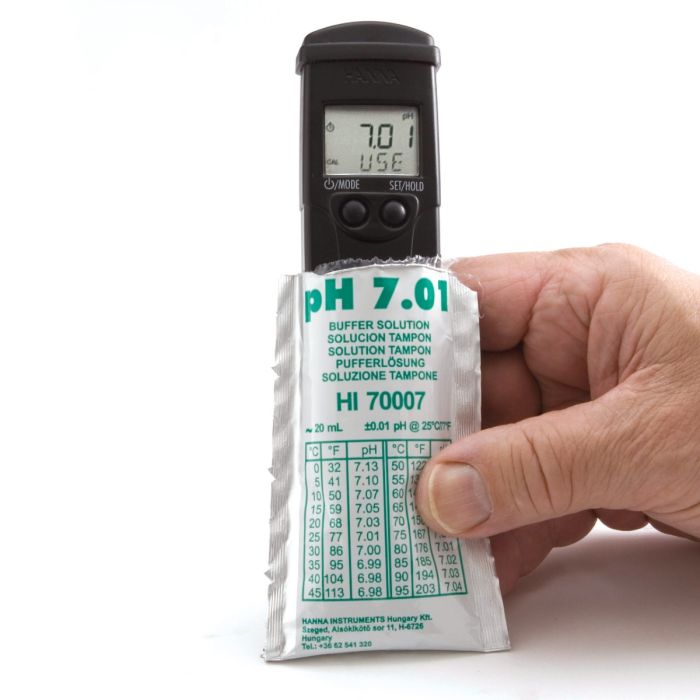
For pH testing, standard buffer solutions such as pH 4.01, 6.86 (NIST), 7.01, and 10.01 are used to align the meter with known reference values. Most Hanna instruments support automatic one or two-point calibration to simplify this process.
EC and TDS calibration is performed using recognised conductivity standards, such as 1413 µS/cm, or equivalent TDS solutions. Calibration should be carried out with fresh standards and repeated regularly, particularly after probe replacement or routine maintenance. Consistent calibration helps minimise drift and ensures results remain traceable to established standards.
Measurement Tips for Reliable Results
To achieve consistent accuracy in both industrial and field environments, electrodes should be rinsed between samples to prevent cross-contamination. Plastic containers are recommended when measuring or calibrating EC and TDS, as they help reduce electrical interference.
Ongoing probe care is equally important. Following manufacturer guidelines for cleaning and storage helps prevent membrane fouling, which can slow response times and reduce accuracy. In laboratory settings where high precision is required, multi-point calibration is recommended to ensure reliable performance across the full measurement range.