
Guide to Chemical Oxygen Demand (COD) Testing Chemical oxygen demand (COD) is a critical waste treatment measurement in everything from municipal systems to food manufacturing waste streams. Performing COD testing the right way is important in determining wastewater treatment effectiveness and can help diagnose any problems in treatment. In this blog, we’ll cover what chemical oxygen demand is, how to test it, and how to get the best equipment for your tests. What is Chemical Oxygen Demand? Chemical oxygen demand (COD) is an indirect measurement of the amount of organic matter in a sample. With this test, you can measure virtually all organic compounds that can be digested by a digestion reagent. COD contrasts with biochemical oxygen demand (BOD), which relies on the use of microorganisms to break down the organic material in the sample by aerobic respiration over the course of a set incubation period (typically five days). BOD and COD correlate with one another in virtually all samples, but BOD is always lower than COD as the biochemical breakdown of organics is often not as complete as the chemical method. Importance of Chemical Oxygen Demand As gauges of organic matter in a sample, BOD and COD are critical in wastewater for determining the amount of waste in the water. Waste that’s high in organic matter requires treatment to reduce the amount of organic waste before discharging into receiving waters. If water treatment facilities do not reduce organic content of wastewater before it reaches natural waters, microbes in the receiving water will consume the organic matter. As a result, these microbes will also consume the oxygen in the receiving water as part of the breakdown of organic waste. This oxygen depletion along with nutrient rich conditions is called eutrophication, a condition of natural water that can lead to the death of animal life. Wastewater facilities reduce COD and BOD by using these same microbes under controlled conditions. These facilities aerate chambers injected with specialized bacteria that can break down the organic matter in an environment that does not harm natural waters. A reduction in BOD is used in these facilities as a benchmark for treatment effectiveness. Since a BOD test takes five days to complete, COD is used to monitor the treatment process in day-to-day operations. The COD test takes only a few hours to complete. If BOD were always used, treated wastewater would need to be held, and a problem with the treatment process wouldn’t be detected until five days later! This would mean that wastewater would need to be held until results could be verified. How to Measure Chemical Oxygen Demand As mentioned before, COD measures organic matter by using a chemical oxidant. It’s critical that a strong enough oxidant is used to react with virtually all organic material in the sample. Historically, potassium permanganate filled this role, but it was found to be inconsistent in its ability to oxidize all the organic matter in a wide variety of waste samples. Currently, most COD tests use potassium dichromate as the oxidant. Potassium dichromate is a hexavalent chromium salt that is bright orange in colour and is a very strong oxidant. Between 95-100% of organic material can be oxidized by dichromate. Once dichromate oxidizes a substance it’s converted to a trivalent form of chromium, which is a dull green colour. Digestion is performed on the samples with a set amount of the oxidant, sulfuric acid, and heat (150°C). Metal salts are usually included to suppress any interferences and to catalyze the digestion. The digestion typically takes two hours to perform. During the digestion, it’s necessary to have excess oxidant; this ensures complete oxidation of the sample. As a result, it’s important to determine the quantity of excess oxidant. The two most common methods for this are titration and colourimetry. Titrimetric Method of COD In the titration method for determining COD, the excess dichromate is reacted with a reducing agent, ferrous ammonium sulphate. As the ferrous ammonium sulphate (FAS) is added slowly, the excess dichromate is converted into its trivalent form. hi902-02_600x600As soon as all the excess dichromate reacts, an equivalence point is reached. This point means that the amount of ferrous ammonium sulphate you added is equal to the amount of excess dichromate. Color indicators can also signal this endpoint, but the process may be automated with a potentiometric indicator (like an electrode). Afterwards, you can calculate how much dichromate went towards oxidizing organic material based on how much we initially added and how much was left over. Colorimetric Method of COD You can also look at the consumption of dichromate by looking at the change in the absorbance of the sample. The samples absorb at particular wavelengths due to the colour of trivalent chromium (Cr3+) and hexavalent chromium (Cr6+). HI83300You can quantify the amount of trivalent chromium in a sample after digestion by measuring the absorbance of the sample at a wavelength of 600 nm in a photometer or spectrophotometer. Alternatively, the absorbance of hexavalent chromium at 420 nm can be used to determine the amount of excess chromium at the end of digestion to determine COD values. This method is easy and requires just a few simple steps. Digest your samples and a reagent blank. (The reagent blank is just a sample of deionized water that’s treated the same as your actual samples. You can even reuse the blank for as long as your reagent batch lasts.) Let the digested samples and blank cool. Zero the instrument using the blank vial. Read the samples. Which method is best for me? Both methods have their advantages and disadvantages. Titration is less equipment-intensive since the only equipment you need is a burette, heating block, and digestion vials. However, the procedure is a little more labor-intensive. An automatic titrator can reduce the amount of user input required and can be used for other applications in wastewater (e.g. alkalinity, volatile acidity). Although colourimetry requires a spectrophotometer or photometer, it offers convenience since most manufacturers offer premixed reagents, so all you need to do is run your

Measuring the pH of Sushi Rice Sushi rice needs to be kept warmer than room temperature for best results when rolling sushi. However, this can create food safety risks which have caused health departments to crack down on practices around the handling of sushi rice. Most guidelines require that the pH of the sushi rice is maintained below 4.6 (Food safety guidelines for preparation and display of Sushi require the pH of Sushi rice to be maintained at or below 4.6), but it can vary in different states (Victoria). A number of our customers are required to maintain a record of hold times and pH levels. The following pH meters are some of their favorites. Portable Food and Dairy pH Meter The HI98161 Professional Foodcare Portable pH Meter is a portable pH and temperature meter designed specifically for food applications. When used with the FC2023 Foodcare pH Electrode for Dairy Products and Semi-Solid Foods, it makes measuring sushi rice a breeze. The FC2023 has a conic tip shape for easy penetration, open junction that resist clogging, and a Polyvinylidene fluoride (PVDF) food grade plastic body that is resistant to most chemicals and solvents, including sodium hypochlorite. It has high abrasion resistance, mechanical strength and resistance to ultraviolet and nuclear radiation. PVDF is also resistant to fungal growth. The FC2023 is an ideal general-purpose pH electrode for food products that connects to the HI98161 with a quick-connect, waterproof DIN connector, allowing for a secure, non-threaded attachment. The FC2023 is an ideal general-purpose pH electrode for food products that connects to the HI98161 with a quick-connect, waterproof DIN connector, allowing for a secure, non-threaded attachment. HALO Bluetooth® Electrode This ability to maximise the use of one meter with multiple probes decreases the cost, allowing to purchase additional probes for additional sites of study. Since the replacement of the nitrate colorimetric tests with the nitrate ISE eliminates the procurement of hazardous waste, there is no need to deal with inconvenient waste disposal while in the field. The HI9829 multiparameter meter is the perfect solution for environmental monitoring needs! The HALO Bluetooth probe lets you turn your smartphone or tablet into a professional grade meter using the free Hanna Lab app. The Hanna Lab app provides a display of the current pH measurement, solution temperature, and mV reading, as well as a graphical plot or tabulated record of measured data over time. The app also features: Built-in help Easy probe calibration Manual or interval data logging for record-keeping Data Sharing Alarms when the readings are outside user-defined limits The HALO probe’s Bluetooth Smart technology offers many advantages in wireless measurement convenience. The Foodcare pH and temperature electrode itself is made of chemically resistant PVDF body. This electrode has a unique open junction design that resists clogging and the probe’s conical tip makes it ideal for pH measurements in sushi rice. HI98127 pH and Temperature Tester Some features of this meter include Automatic Temperature Compensation (ATC), stability indicator, and a replaceable pH electrode with extractable cloth junction. The pHep®4 pH/Temperature Tester – HI98127 is a waterproof meter that can be easily calibrated and used to perform pH measurements. While HI98161 and FC2022 meters can be stuck directly into cooked rice to take measurements, the rice slurry has to be made for testing with the HI98127. Testing the pH of Sushi Rice with the HI98127 Rinse the electrode with distilled or deionized (DI) water. Turn the unit on by pressing the MODE button. Hold the MODE button down until “CAL” appears on the LCD screen. Calibrate unit using HI7007L (7.01) and HI7004L (4.01) buffers. After calibration, rinse off probe with distilled/DI water. Make a slurry by combining equal parts of sushi rice and distilled/DI and stir/blend for 30 seconds. Insert your tester into the liquid portion of the slurry ensuring that the electrode bulb is completely submerged. Wait until the meter stabilises and record your result. When finished testing, rinse off electrode with distilled/DI water. After testing, put HI70300L storage solution in the cap and put the cap back on the probe, to ensure the electrode stays hydrated. Related posts Environmental Monitoring of Nitrates and Other Water Quality Parameters: pH, Environmental Monitoring of Nitrates and Other Water Quality Parameters: pH,… Salt Concentration In A Brine Solution For Curing Salmon Salt Concentration In A Brine Solution For Curing Salmon Traditionally,… Load More Subscribe to our newsletter Latest offers, tips, news, industry insights and resources delivered to your inbox. Email: Name: Subscribe You have been successfully Subscribed! Ops! Something went wrong, please try again.

The Importance of Measuring pH in Milk The measurement of pH in milk is important in testing for impurities, spoilage, and signs of mastitis infection. While there are a number of factors that affect the composition of milk, pH measurements can help producers understand what might be causing certain compositional changes. pH measurements are commonly performed at various points in a milk processing plant. Fresh milk has a pH value of 6.7. When the pH value of the milk falls below pH 6.7, it typically indicates spoilage by bacterial degradation. Bacteria from the family of Lactobacillaceae are lactic acid bacteria (LAB) responsible for the breakdown of the lactose in milk to form lactic acid. Eventually, when the milk reaches an acidic enough pH, coagulation or curdling will occur along with the characteristic smell and taste of “sour ” milk. Milk with pH values higher than pH 6.7 potentially indicate that the milk may have come from cows infected with mastitis. Mastitis is an ever-present challenge with dairy milking cows. When infected, the cow’s immune system releases histamine and other compounds in response to the infection. There is a resulting increase in permeability of endothelial and epithelial cell layers, allowing blood components to pass through a paracellular pathway. Since blood plasma is slightly alkaline, the resulting pH of milk will be higher than normal. Typically milk producers can perform a somatic cell count to detect a mastitis infection, but a pH measurement offers a quick way to screen for infection. Understanding the pH of raw milk can also help producers optimise their processing techniques. For example, in operations that use Ultra High Temperature (UHT) processing, even small variations from pH 6.7 can affect the time required for pasteurisation and the stability of the milk after treatment. The best way to measure pH in milk is using an HI98162 meter designed specifically for this application. Measuring the pH of milk can provide a number of challenges. Milk products tend to have a high solids content that will coat the sensitive glass membrane surface and/or clog the reference junction. The HI98162 professional pH meter is supplied with the FC1013 pH/temperature probe specifically designed for measuring pH in milk. The Polyvinylidene fluoride (PVDF) body is a food-grade plastic that is resistant to most chemicals and solvents, including sodium hypochlorite. It has high abrasion resistance, mechanical strength, and resistance to ultraviolet and nuclear radiation. PVDF is also resistant to fungal growth. The FC1013 is an ideal general-purpose pH electrode for milk products that connects to the HI98162 with a quick-connect, waterproof DIN connector, allowing for a secure, non-threaded attachment. Related posts Environmental Monitoring of Nitrates and Other Water Quality Parameters: pH, Environmental Monitoring of Nitrates and Other Water Quality Parameters: pH,… Salt Concentration In A Brine Solution For Curing Salmon Salt Concentration In A Brine Solution For Curing Salmon Traditionally,… Load More Subscribe to our newsletter Latest offers, tips, news, industry insights and resources delivered to your inbox. Email: Name: Subscribe You have been successfully Subscribed! Ops! Something went wrong, please try again.

Preparing a Soil Sample for Nutrient Analysis Not sure how to prepare a sample for pH and EC/TDS testing? Follow the steps below. Step 1: Gather your materials. You will need: A container cleaned with distilled or DI water A measuring cup A fresh sample of your soil Distilled or DI water A magnetic stirrer OR a stirring utensil Step 2: Measure out equal parts of soil and distilled water, ensuring there is a large enough sample to completely submerge your electrode. Step 3: Add the soil to the clean container, then add the distilled water. Step 4: Stir the sample. For best results use a magnetic stirrer. If you don’t have one on hand, use a clean stirring tool. Make sure all clumps of soil get broken up. Step 5: Wait 15 minutes for the sample to settle before taking your measurement. Step 6: Immerse your electrode into the sample and wait for a stable reading. Hanna Tip: An ideal pH reading is between 5.5 and 7. If you are getting a reading far off from this, there may be a problem with your electrode. Related products GroLine Waterproof EC/TDS Tester – HI98318 $153.93 Add to cart GroLine Monitor for Hydroponic Nutrients – HI981421-Threaded probe for insertion mounting $947.40 Add to cart GroLine Portable Hydroponics Waterproof pH, EC, TDS, Temperature Meter – HI9814 $509.36 Add to cart GroLine Monitor for Hydroponic Nutrients – HI981420-Standard probe with no threads $705.29 Add to cart GroLine Waterproof pH Tester with 0.01 Resolution – HI98118 $153.93 Add to cart Load More Related posts Environmental Monitoring of Nitrates and Other Water Quality Parameters: pH, Environmental Monitoring of Nitrates and Other Water Quality Parameters: pH,… November 22, 2023 Salt Concentration In A Brine Solution For Curing Salmon Salt Concentration In A Brine Solution For Curing Salmon Traditionally,… November 22, 2023 Load More Subscribe to our newsletter Latest offers, tips, news, industry insights and resources delivered to your inbox. Email: Name: Subscribe You have been successfully Subscribed! Ops! Something went wrong, please try again.

Monitoring Bentonite in Wine As a winemaker working in a world where many consumers base their purchases off of looks alone, the right colour and clarity of your product can make or break your brand. Several steps are required to transform grapes off the vine to the crystal clear wines found on the shelves of Australia. Before shipping to the local market, wine is treated with fining agents, since unrefined wine is quite turbid and hazy. The turbidity is due to suspended solids produced during fermentation. This cloudiness is what winemakers refer to as protein haze, or haze for short. Thaumatin-like proteins (TLPs) and chitinases are the primary grape proteins responsible for haze formation. These positively charged proteins degenerate and stick together, resulting in undesirable flocculent clouds and visible haziness. Bentonite clay is used as a fining agent in wine. Fining, or clarifying, is the process of removing substances that contribute to haze by binding them through adsorption. Bentonite is negatively charged and incorporated into the wine as a colloid (fine powder mixed with water). The negatively charged clay binds to the positively charged protein molecules. After treating the wine, the particulates settle out, transforming the beverage to the desired colour and clarity. This process also makes the wine more stable, meaning the wine’s signature taste, aroma and appearance won’t change appreciably while in storage. It is important to know exactly how much bentonite to add to your wine because if added in excess it can actually strip the stock of colour and flavour. This is why many winemakers are looking for a means of analysing the protein present in their wine to approximate an equivalent amount of bentonite to add for fining. The Hanna Instruments HI83749 Portable Turbidity Meter and Bentonite Monitor can be a solution to their problem. The HI83749 offers a quick test to verify the risk of future protein haze formation; therefore, allowing to confidently define the right amount of bentonite to add. The HI83749 includes a 1000 uL pipette to accurately dispense 1 mL of the bentonite check solution. The reading obtained is accurate to +/- 2% of the reading plus 0.05 NTU. Reading can be logged and transferred to a Windows-compatible PC with a USB cable. Any customer will appreciate the convenience and completeness of the sampling kit. Everything necessary to perform the test is provided in a rugged and compact carrying case, including the calibration standards used to check and calibrate the meter. Related posts Environmental Monitoring of Nitrates and Other Water Quality Parameters: pH, Environmental Monitoring of Nitrates and Other Water Quality Parameters: pH,… Salt Concentration In A Brine Solution For Curing Salmon Salt Concentration In A Brine Solution For Curing Salmon Traditionally,… Load More Subscribe to our newsletter Latest offers, tips, news, industry insights and resources delivered to your inbox. Email: Name: Subscribe You have been successfully Subscribed! Ops! Something went wrong, please try again.

Monitoring Water Filtration at a Brewery Although consumers focus on the flavour and alcohol content in beers, brewers know that the vast majority of their product is water. Water is what makes many of the well-known beers of the world so unique. For example, the Pilsen region of the Czech Republic is known for producing the pilsner, a pale golden lager with a crisp hoppy flavour. This style of beer was easy to produce because the low alkalinity of the Pilsen water required very little malt to bring the pH into the ideal range for brewing. This contrasts with the water commonly found in Dublin, which has a much higher alkalinity and therefore requires darker malts to lower the pH to the ideal range for brewing. This made Ireland an ideal place to brew porters, stouts, and other dark beers. Traditional brewers understood the influence of source water qualitatively without an understanding of pH or water chemistry. Since then, our understanding of brewing chemistry has expanded. We now know that darker malts are more acidic and will change the pH more dramatically than lighter malts. This requires adjustments to the brewing recipe or adjustments to the source water to ensure that beers turn out exactly as anticipated. As a result, homebrewers and professionals alike place source water chemistry as a high priority. Knowing water chemistry goes beyond just alkalinity and pH. Many brewers get their water from a municipal source, which means that chlorine is usually present in their source water. Chlorine in the brewing process can cause off flavours and slow fermentation, even at the typical low levels of 0.5 mg/L concentrations in tap water. Due to the amount of variables in the source water, brewers tend to turn to reverse osmosis (RO) systems to remove chlorine and reduce the mineral content of the water by at least 90%. Reverse osmosis are a type of affordable filtration where water passes through a semipermeable membrane (typically active carbon) to remove ions, molecules, and larger particles from drinking water. This has the benefit of offering full control of the brewing water; brewers can simply add in any minerals they want in the beer and leave the rest out. By adjusting the water chemistry, a pilsner may be made in the Czech style without having water delivered from Pilsen. Application: A craft brewery contacted Hanna Instruments to inquire about a water quality solution for their treated water that they use for brewing. It was important that they tested the water coming out of the RO filtration system to verify that it is working effectively. The sales representative suggested edge, Hanna’s multiparameter tablet-style pH meter/EC meter/DO meter, HI2030. The HI2030 kit comes supplied with the HI763100 four ring conductivity probe. The HI2030 allowed the brewery to measure the total dissolved solids in the RO filtered water to ensure that it removed the minerals content effectively from the tap water. Because edge is multiparameter, the customer was able to add pH and dissolved oxygen measurements by simply purchasing additional electrodes. The customer appreciated that since the HI2030 uses digital electrodes, the GLP and calibration data was stored directly in the probe. This meant they could calibrate for each parameter at the beginning of the day, and switch between probes and parameters without having to recalibrate. The customer was impressed with the large variety of application specific pH electrodes available for purchase with edge. In addition to the HI2030 EC edge kit, they purchased a pH electrode with a clog-proof junction, the HI10480, for pH measurement in their water, must, and finished beer. The low profile of edge was desirable by the customer and it was easy to move the meter to save space when needed. The versatility of the meter brought value and a complete solution for the customer. Related posts Environmental Monitoring of Nitrates and Other Water Quality Parameters: pH, Environmental Monitoring of Nitrates and Other Water Quality Parameters: pH,… Salt Concentration In A Brine Solution For Curing Salmon Salt Concentration In A Brine Solution For Curing Salmon Traditionally,… Load More Subscribe to our newsletter Latest offers, tips, news, industry insights and resources delivered to your inbox. Email: Name: Subscribe You have been successfully Subscribed! Ops! Something went wrong, please try again.

The Importance of Temperature in Beer Making Throughout the entire brewing process, temperature plays a critical role in developing a good quality beer that is consistent in taste. Small fluctuations in temperature can lead to a much different product than what was originally intended. The overall process of brewing involves a mash soak, lautering, boiling and cooling of the wort, pitching the yeast, fermentation, filtering, and a final bottling and carbonation. temperature-in-beer-makingDuring the course of the mashing, lautering, and boiling processes the temperature is carefully controlled to effectively create wort, the sugary extract produced from malt, grains, and hops. After these stages, the wort is mixed with purified water and cooled to reach the proper temperature of 18°C to 24°C for yeast introduction. Once the yeast has been introduced, fermentation can begin. There is an optimal temperature range for fermentation that is dependent on the strain of yeast. When fermentation occurs outside of this optimal temperature range, byproducts, both desirable and undesirable, will be produced. Application: During a community outreach program at the Hanna Instruments headquarters, a local brewmaster spoke to professional and hobbyist brewers alike about the importance of temperature in beer making. The Applications Department followed the talk with a tasting experiment showing the effects of temperature adjustment during fermentation. Hanna’s experiment involved brewing three identical batches of Nut Brown Ale. The only difference between the three batches was the temperature during the fermentation stage. The three batches, named Nutty Ranger, Not Far From the Tree, and Temper Tantrum, were fermented at temperatures of 18°C, 22°C, and 27°C, respectively. An Irish Ale Yeast was used which has an optimal fermentation temperature of 17°C to 22°C. The Nutty Ranger was fermented in the middle of the optimal temperature range while Not Far From the Tree was fermented at lower temperature and Temper Tantrum fermented at a higher temperature. It was observed that as the fermentation temperature of the batches increased, the resulting beers had a smell identified as more “fruity ” and a stronger “alcohol” taste. The “fruity ” effect, which was most prevalent in the Not Far From the Tree and Temper Tantrum brews, was due to an increase in the amount of esters produced during fermentation. Esters are aromatic chemical compounds that are a favoured byproduct of yeast at higher temperatures. The “alcohol” effect, which was highly noticeable in the Temper Tantrum brew, was due to an increase in the amount of fusel alcohols produced during fermentation. When fermentation occurs at higher than optimal temperatures, the formation of fusel alcohols such as propanol, butanol, and isoamyl alcohol are more prevalent; these alcohols are known to give an astringent, medicinal taste to beer. They do not increase the overall alcohol concentration of beer, but instead the types of alcohol present. Fermenting temperatures were monitored with the HI148 datalogger. The HI148 was chosen as it has one external probe, which was immersed in the fermentation vessel, and one internal probe, which was used to monitor that ambient room temperature. All three dataloggers were programmed to record a measurement every 5 minutes over the course of 12 days; this provided just over 3400 data points, which is well within capacity of theHI148. The HI148 can log up to 16000 samples or 8000 samples per channel. It also features an LCD display that shows in sequence the current reading, number of readings taken, low reading, high reading, and number of readings that exceeded the set alarm limits for each channel. The HI148 was programmed with the HI141001 infrared transmitter and HI141000 Windows® compatible software. The magnetic remote key was used to start the datalogging by swiping over the top of the meter, and after logging was finished the data was downloaded after fermentation. The software was used to create a graph depicting the data collected by each datalogger for comparison between the three batches of beer. Related posts Environmental Monitoring of Nitrates and Other Water Quality Parameters: pH, Environmental Monitoring of Nitrates and Other Water Quality Parameters: pH,… Salt Concentration In A Brine Solution For Curing Salmon Salt Concentration In A Brine Solution For Curing Salmon Traditionally,… Load More Subscribe to our newsletter Latest offers, tips, news, industry insights and resources delivered to your inbox. Email: Name: Subscribe You have been successfully Subscribed! Ops! Something went wrong, please try again.
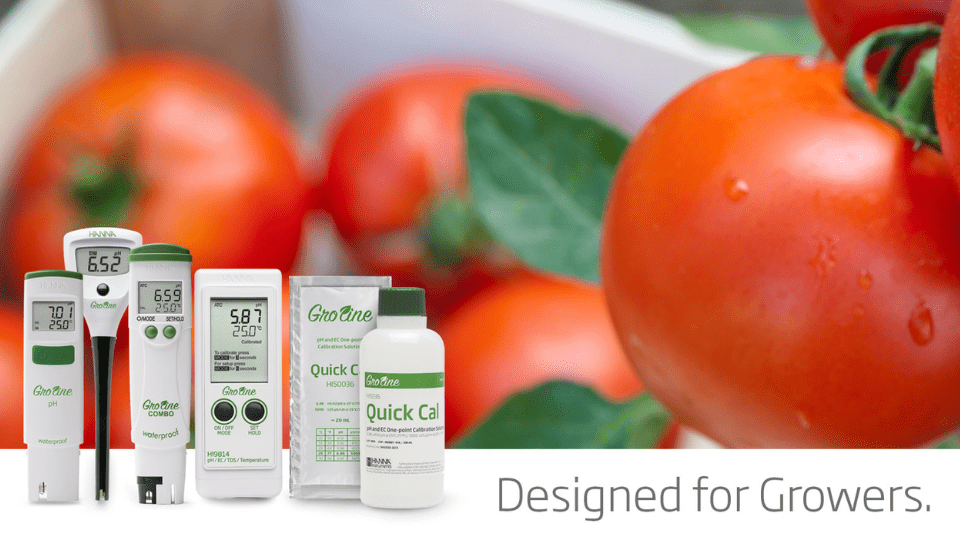
GroLine: pH, EC and TDS Meters Designed for Agriculture and Hydroponics Hanna Instruments GroLine products are designed with the hydroponics grower in mind. Growers can rely on Hanna’s meters and testers for accurate measurements of their nutrients in soil, growing media, or solution to ensure successful crop yields. We design, develop and support our own products ensuring the highest level of quality! Most GroLine Models provide these benefits Accurate – Professional grade pH/EC/TDS/Temperature electrodes and meters Fast – QuickCal single solution for calibration Waterproof – Withstands humidity and accidental immersions GroLine Hydroponic Waterproof pH/EC/TDS/Temperature Portable Meter – HI9814 Application Driven Performance Hydroponic growers are faced with many difficulties when performing analytical measurements. Humidity, electrical noise from ballast and pumps, and pH calibration to a single point that is also close to the expected value, all can be challenging in obtaining an accurate reading. The GroLine portable pH/EC/TDS meter uses a single probe designed with an amplifier in the pH electrode that helps eliminate electrical noise resulting in a fast and accurate pH measurement. The pH electrode also has a buffered salt solution in the tip of the pH electrode that is at a different value from a standard pH electrode. Using a different pH buffered solution will result in a dramatically different measurement value from pH 7 being displayed in the event there is a hairline crack in the electrode. Quick Cal Mode Quick Cal mode allows the user to perform a single point pH and EC/TDS calibration with one solution. Simply enter calibration mode and the meter will prompt to confirm calibration to pH 6.86 and 5.00 mS/cm. Multiparameter Measuring Modes GroLine portable meters offer both Conductivity (EC) and Total Dissolved Solids (TDS) measuring modes. The EC measuring mode has an expanded scale to measure up to 6.00 mS/cm while TDS measuring range is up to 3999 ppm using a 0.7 conversion factor. Quick Calibration Solution for GroLine pH and EC Meters (25 x 20 mL sachets) With GroLine Quick Cal solution only one solution is needed to calibrate both pH and conductivity. This dual-purpose calibration solution is used with compatible meters with the Quick Cal mode or with pH and conductivity meters that calibrate to pH 6.86 and 5.00 mS/cm, respectively. GroLine Hydroponic Waterproof Pocket pH/EC/TDS/Temperature Tester – HI98131 Replaceable pH electrode with extractable junction GroLine waterproof pocket pH/EC/TDS meter uses a cartridge design replaceable electrode that does not have any pins to align or that can be broken. Simply insert and turn to lock in place. The replacement pH electrode also has an extractable junction that is used to clear any clogging that occurs with use resulting in erratic and drifting readings. Quick Cal Mode Quick Cal mode allows the user to perform a single point pH and EC/TDS calibration with one solution. Simply enter calibration mode and the meter will prompt to confirm calibration to pH 6.86 and 5.00 mS/cm. Multiparameter Measuring Modes GroLine portable meters offer both Conductivity (EC) and Total Dissolved Solids (TDS) measuring modes. The EC measuring mode has an expanded scale to measure up to 6.00 mS/cm while TDS measuring range is up to 3999 ppm using a 0.7 conversion factor. GroLine Waterproof Hydroponic pH Tester – HI98118 The GroLine HI98118 pH/temperature tester is our latest pocket meter for measuring the pH of a hydroponic nutrient solution. This modern looking meter is only 0.7″ thick and extremely ergonomic, fitting comfortably in your hand. The HI98118 has a very large easy to read LCD display that shows both pH and temperature along with calibration, stability and low battery indicators. All operations are simplified to two buttons. One is for turning the meter on/off and the other for automatic one or two point calibration. GroLine Waterproof EC/TDS (ppm) Tester – HI98318 The HI98318 is our latest pocket meter for measuring the EC/TDS of a hydroponic nutrient solution. This modern looking meter is only 0.7″ thick and extremely ergonomic, fitting comfortably in your hand. The HI98318 has a very large easy to read LCD display that shows both EC or TDS and temperature along with calibration, stability and low battery indicators. All operations are simplified to two buttons. One is for turning the meter on/off and the other for automatic one point calibration. GroLine Hydroponics pH Tester – HI98115 The HI98115 is a GroLine pH tester with advanced features for the measurement of pH in hydroponic nutrient solutions. The HI98115 is a very simple meter to operate with all functions including turning on/off and calibration are performed with a single button. The HI98115 features a replaceable HI1271 pH electrode that can be changed when needed without having to buy a new meter. The HI98115 is supplied complete with a carrying case and calibration solutions. Soil Test™ Direct Soil EC Tester – HI98331 The Soil Test™ Direct Soil EC Tester – HI98331 is a rugged and reliable pocket-sized tester that offers quick and accurate readings. The Soil Test™ Direct Soil EC Tester – HI98331 features a stainless steel penetration probe for direct measurement of conductivity in soils. With a compact size, single button operation, and automatic calibration, Soil Test is an excellent choice for taking direct conductivity measurements in soil. Related posts Environmental Monitoring of Nitrates and Other Water Quality Parameters: pH, Environmental Monitoring of Nitrates and Other Water Quality Parameters: pH,… Salt Concentration In A Brine Solution For Curing Salmon Salt Concentration In A Brine Solution For Curing Salmon Traditionally,… Load More Subscribe to our newsletter Latest offers, tips, news, industry insights and resources delivered to your inbox. Email: Name: Subscribe You have been successfully Subscribed! Ops! Something went wrong, please try again.

The Importance of pH in Soils and Nutrient Solutions for Plant Growth The characteristics of soil play an important role in the health of a plant. For commercial gardeners and hobbyists alike, the measurement of soil pH can help one better understand the availability of nutrients, permeability of the soil, and the types of plants that can be grown. The pH of soil depends on many environmental factors. Alkaline soils are characterised by the accumulation of soluble salts and carbonates, and are often found in areas that are rich in limestone. Acidic soils are characterised by the presence of free hydrogen and aluminium ions, and may be caused by acid rain, fertiliser application, or decomposing organic matter. Most natural soils have a pH ranging from pH 4.0-8.0, depending on the geology of the area. One of the key factors in plant growth is the availability of macronutrients and micronutrients. The availability of both macro and micronutrients is directly related to pH. The pH of soil and nutrient solutions will determine the solubility of the nutrients. Soils that have a pH of 4.0 to 5.0 are considered to be strongly acidic; within this acidic range, the solubility of minerals such as aluminium, iron, and manganese increases and can become toxic to plants. Soils that have a pH greater than pH 8.0 or 9.0 are considered to be strongly alkaline; at this pH range, the nutrients that plants need to grow are not soluble and available for uptake. While the optimum pH value for nutrient uptake is dependent on the species of plant being grown, the majority of plants thrive in a soil that is slightly acidic. It is also important to note that there are optimum pH values for beneficial soil bacteria, such as bacteria that convert atmospheric nitrogen (N₂) into plant available soil nitrogen (NH₄+). These nitrogen-fixing bacteria live on the root hairs of legumes and thrive at an optimum pH range between pH 6.0 and 8.0. Optimum pH Levels for Plants Vegetable Plants Optimal pH Artichoke 6.5-7.5 Asparagus 6-8 Barley 6-7 Bean 6-7.5 Brussels Sprout 6-7.5 Corn (Maize) 6-7.5 Cucumber 5.5-7.5 Early carrot 5.5-7 Early Potato 4.5-6 Egg Plant 5.5-7 Late carrot 5.5-7 Late Potato 4.5-6 Lettuce 6-7 Melon 5.5-6.5 Oat 6-7 Onion 6-7 Pea 6-7.5 Pepper 6-7 Pumpkin 5.5-7.5 Rice 5-6.5 Soybean 5.5-6.5 Spinach 6-7.5 Strawberry 5-7.5 String Beans 6-7.5 Sugar beet 6-7 Sunflower 6-7.5 Sweet Potato 5.5-6 Tomato 5.5-6.5 Watermelon 5.5-6.5 Wheat 6-7 Garden/Flower Plants Optimal pH Acacia 6-8 Acanthus 6-7 Amaranth 6-6.5 Bougainvillea 5.5-7.5 Dahlia 6-7.5 Erica 4.5-6 Euphorbia 6-7 Fuchsia 5.5-7.5 Gentian 5-7.5 Gladiolus 6-7 Hellebore 6-7.5 Hyacinth 6.5-7.5 Iris 5-6.5 Juniper 5-6.5 Ligustrum 5-7.5 Magnolia 5-6 Narcissus 6-8.5 Oleander 6-7.5 Paulownia 6-8 Portulaca 5.5-7.5 Primula 6-7.5 Rhododendron 4.5-6 Roses 5.5-7 Sedum 6-7.5 Sunflower 6-7 Tulip 6-7 Viola 5.5-6.5 Orchard Plants Optimal pH Apple 5-6.5 Apricot 6-7 Apricot 6-7 Cherry 6-7.5 Grapefruit 6-7.5 Grapevine 6-7 Lemon 6-7 Nectarine 6-7.5 Orange 5-7 Peach 6-7.5 Pear 6-7.5 Plum 6-7.5 Pomegranate 5.5-6.5 Walnut 6-8 Related posts Environmental Monitoring of Nitrates and Other Water Quality Parameters: pH, Environmental Monitoring of Nitrates and Other Water Quality Parameters: pH,… Salt Concentration In A Brine Solution For Curing Salmon Salt Concentration In A Brine Solution For Curing Salmon Traditionally,… Load More Subscribe to our newsletter Latest offers, tips, news, industry insights and resources delivered to your inbox. Email: Name: Subscribe You have been successfully Subscribed! Ops! Something went wrong, please try again.

pH of Hot Sauce Hot sauce has been steadily gaining attention in the eyes of consumers in Australia. Hot sauce, also known as chilli sauce or pepper sauce, is a spicy condiment made from chilli peppers. Although the variations of hot sauce are endless, all sauces contain at least one variety of chilli pepper. The sauce might be vegetable-based with chillies added for heat, or chilli-based for a more chilli-forward flavor. Other spices and flavourings may also be included, such as garlic, black pepper, and mustard oil. In nearly all cases, these sauces have acidic ingredients added to provide a sharp, tart flavour. Most often, the acid addition is in the form of vinegar (acetic acid), but citrus juices can be used to replace or supplement the vinegar. The presence of acid helps to preserve the sauce, guarding against oxidation and microbial growth. Preparing sauces in this manner allows the sauces to be shelf-stable; sauces without acid would have to be refrigerated during storage. Foodstuffs acidifed with additional ingredients have regulations set by The Board of Food Standards Australia New Zealand. The Standard 2.3.1 states that “A food that is fruit and vegetables in brine, oil, vinegar or water must not have a pH greater than 4.6″. The threshold value set of pH 4.6 is to protect consumers against Clostridium botulinum, which thrives at pH values above 4.6. C. botulinum is known to produce toxins that can cause paralysis and death in low doses, even if the food is cooked. As a result, the guidelines suggest that manufacturers measure pH in order to ensure that the finished product has a pH less than 4.6 and that the product is safe to sit on shelves. The guidelines provide several technologies for testing pH, such as pH paper, indicator dyes, and the potentiometric (meter and electrode) method. However, the potentiometric method is most often preferred due to its accuracy, especially when the pH of the food substance is above pH 4.0, where any amount of error can be the difference between life and death. As the pH of hot sauce varies widely based on the recipe (sometimes near the critical value), it is imperative to get accurate results during production. Application: A hot sauce company contacted Hanna Instruments for a pH meter to replace their old pH tester. The tester had been working well for them but since they were expanding production, they wanted a meter with more accuracy and resolution. The technical sales representative offered the HI98161 Professional Foodcare Portable pH Meter. The customer appreciated that the HI98161 is waterproof and durable, which gave him confidence in investing in a more advanced meter. Because the customer had some sauces that were in the pH range of 4.1-4.3, they wanted to be confident in their meter’s accuracy in this critical range to ensure shelf stability of their product. The customer was pleased with the CAL Check™ of the HI98161, which provided calibration reminders and clearly displayed the electrode condition on the measurement screen after each calibration. CAL Check definitely assured the customer that their calibration was valid and therefore, their readings were accurate, every time they used it. The FC2023 electrode included with the HI98161 was also an attractive feature. Unlike the tester they had been using previously, this electrode is specifically designed for measurements in foods. The clog-resistant open reference junction on the electrode helped them achieve faster response times. Additionally, the PVDF body on the electrode made the customer more confident that the electrode would not shatter while being on the production line. Overall, the customer found that the meter and electrode added value and provided confidence in their products. Related posts Environmental Monitoring of Nitrates and Other Water Quality Parameters: pH, Environmental Monitoring of Nitrates and Other Water Quality Parameters: pH,… Salt Concentration In A Brine Solution For Curing Salmon Salt Concentration In A Brine Solution For Curing Salmon Traditionally,… Load More Subscribe to our newsletter Latest offers, tips, news, industry insights and resources delivered to your inbox. Email: Name: Subscribe You have been successfully Subscribed! Ops! Something went wrong, please try again.